In Quevedo, a mid-sized city on Ecuador’s coast, Central Park sits at the centre of daily life. Families pass through on their way to the market, and older residents pause on benches to watch the city go by.
Yet despite its location, it was not a space many adolescents felt comfortable using. Parts of the park had become neglected, and for young people in particular, it lacked the sense of safety and belonging that public spaces are meant to provide.
For years, adolescents in Quevedo had few opportunities to participate in decisions about their city. Their ideas rarely travelled beyond schoolyards or informal conversations among friends. There were activities for young people, but few spaces where their voices could influence how public spaces were used – or how the city responded to them.
“Previously, there were not many participatory spaces for adolescents, and their voice was not heard within the canton,” says Sergio Yépez, Coordinator of the Inclusion and Social Assistance Unit at the Municipal Government of Quevedo.
From the municipal perspective, adolescents were largely absent from civic processes. From the adolescents’ perspective, the distance felt just as real.
“Before, there were no projects or spaces where adolescents could say what the city needed,” recalls Luis Mario Murillo, now 18 and a member of the Core Group of the Alza Tu Voz initiative.
When Luis Mario first joined the project, he describes himself as someone who preferred to stay in the background.
“I was an adolescent who was afraid to speak,” he says. “I wasn’t used to participating in spaces where decisions are made. I didn’t know how to express my ideas in front of others.”
The Alza Tu Voz (or ‘Raise your Voice’) initiative – supported by the Healthy Cities for Adolescents programme – was designed to change exactly this dynamic. Across Quevedo and Riobamba, Alza tu Voz has reached at least 437 adolescents. Activities have been implemented in six schools, while adolescents involved in the initiative have also organised 43 community activities in different public spaces and with a range of local stakeholders, gradually building both confidence and visibility in their cities.
What began as small group discussions has evolved into something more public – and more consequential.
When young people step into the centre of the city
For Luis Mario, the turning point came during an initiative linked to Central Park.
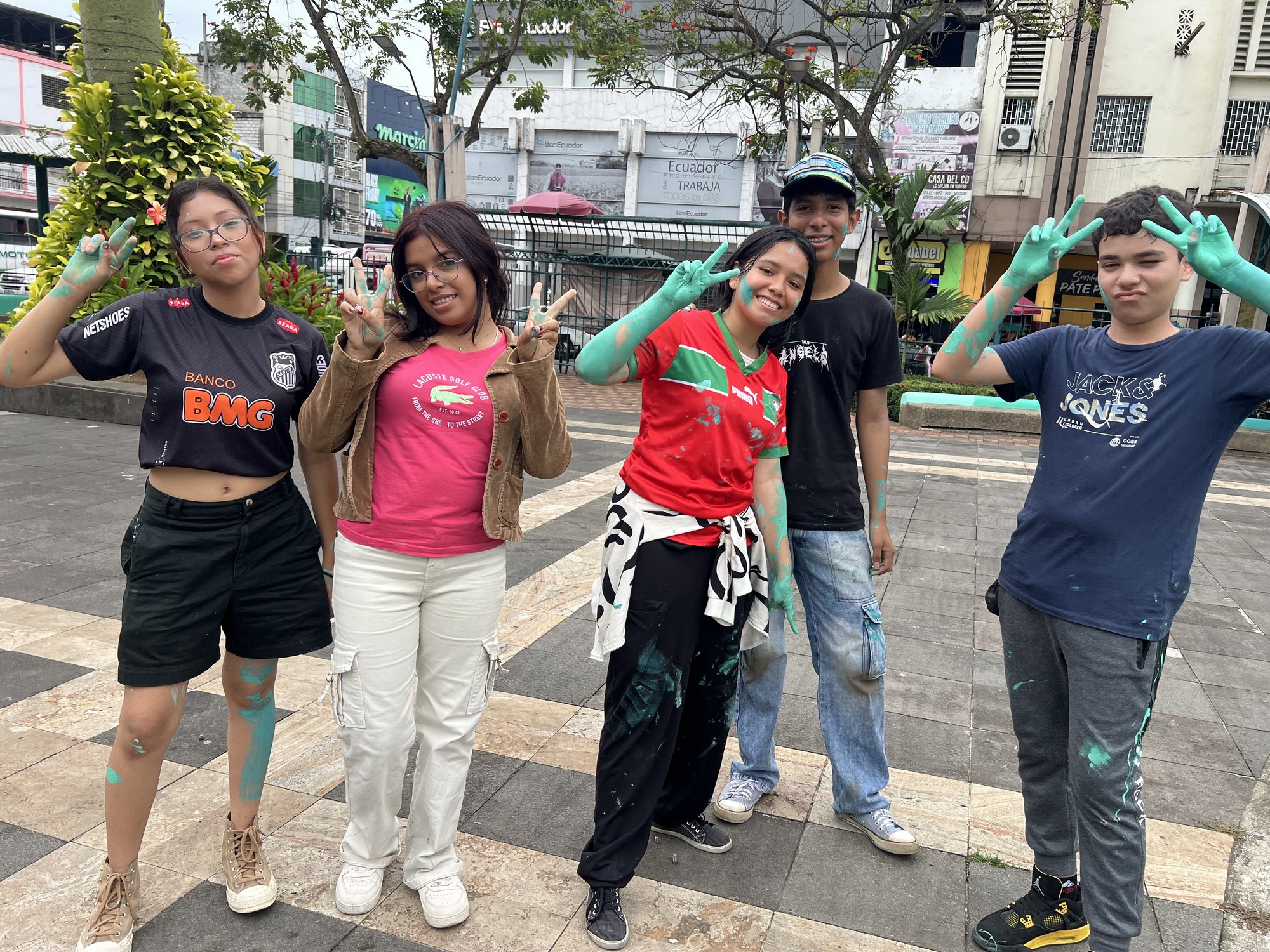
The park is one of the most visible public spaces in Quevedo – a symbolic centre of community life. When adolescents from the project’s Nucleus Group (a core group of adolescents involved in the project) organised activities there, they stepped into a space where their leadership could not go unnoticed.
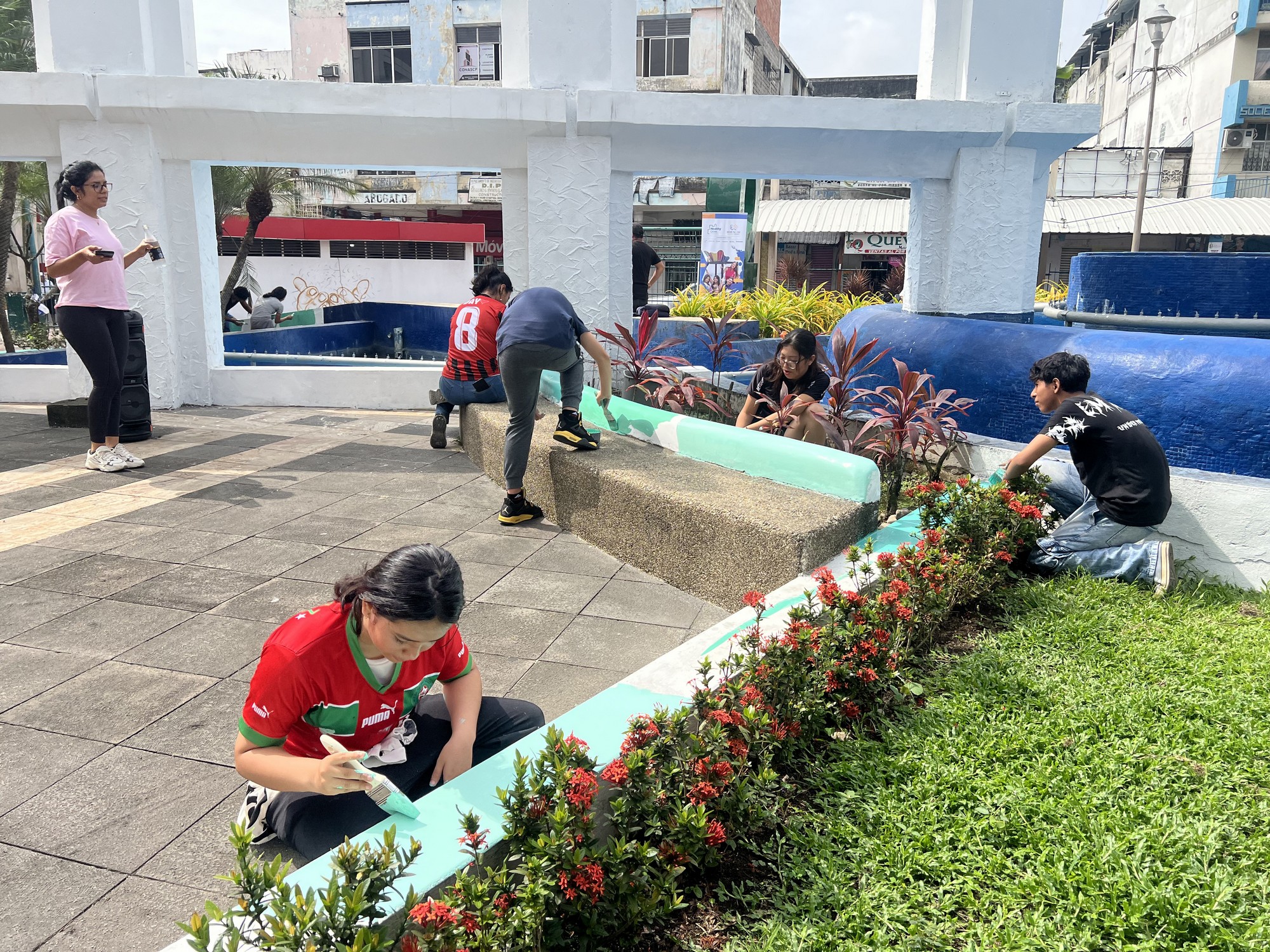
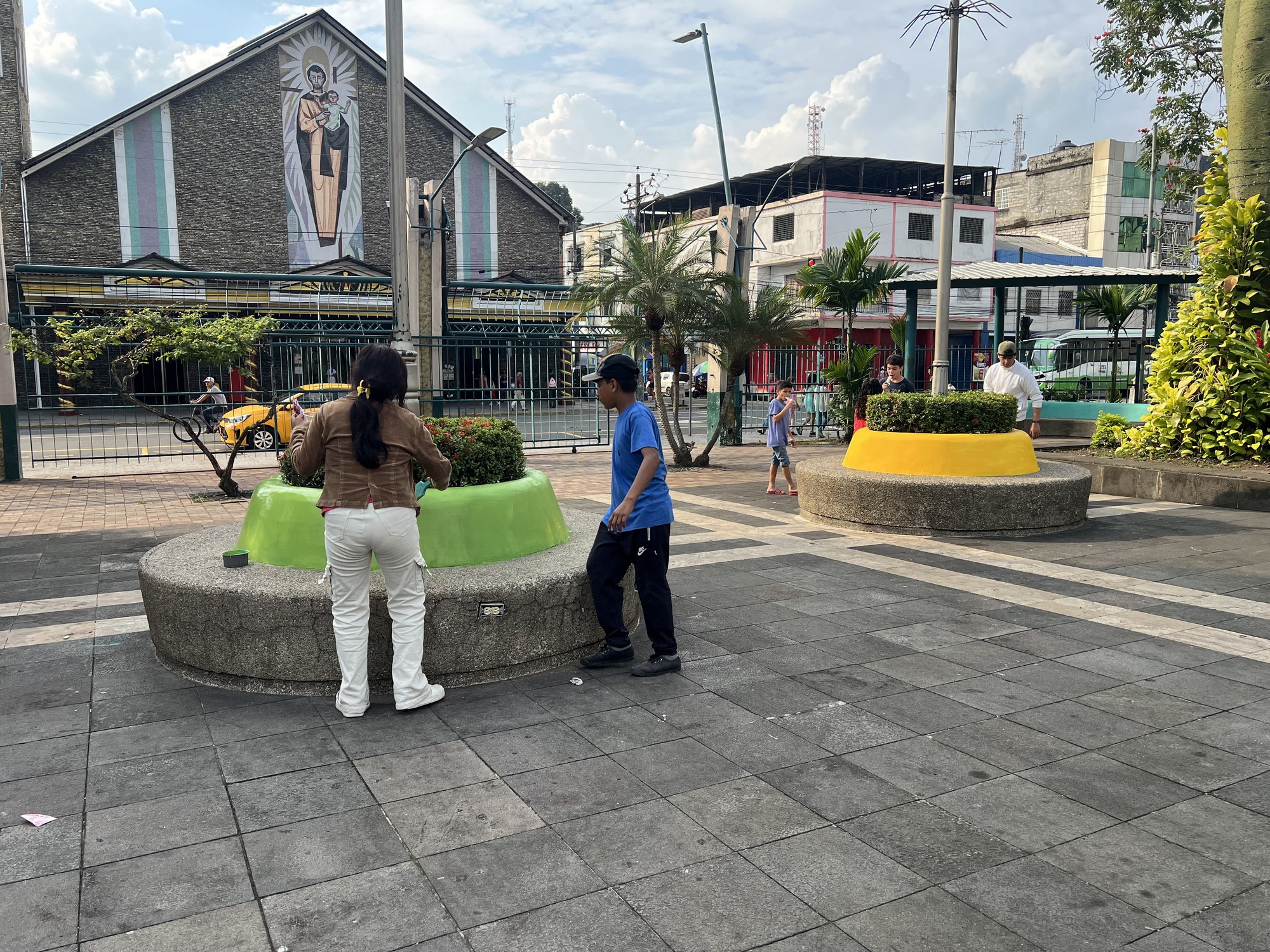
More than 100 adolescents and volunteers took part in activities in and around the park. They mobilised participants, engaged with residents, and communicated their initiative through local networks and media. Armed with megaphones and a clear sense of purpose, they explained what they were doing – and why it mattered.
“We called for volunteers, informed the community, and spoke with local media,” Luis Mario recalls.
For many residents, it was the first time they had seen adolescents take visible ownership of a public space.
“People would walk by and say, ‘How beautiful – adolescents are doing this,’” he says. “That gave us confidence.”
But the significance of the moment went beyond visibility.
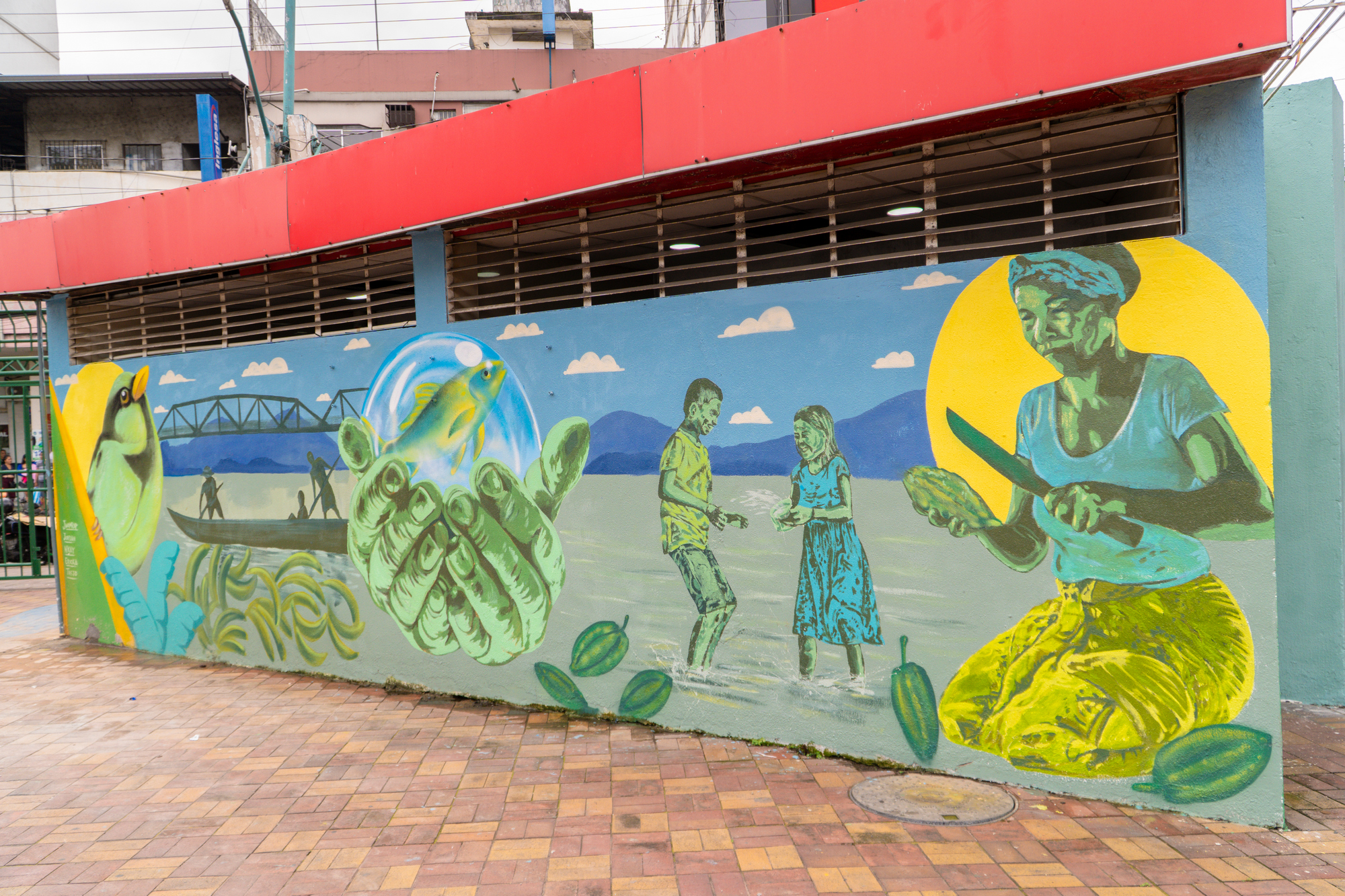
“In Urbano, we came together with local government officials and adolescents to analyse our city as a team,” Luis Mario explains. “For the first time, we felt that they were not only listening to us, but that our ideas were actually brought to life in the park.”
From one initiative to ongoing change
What followed was not a one-off event, but the beginning of sustained activity.
The Central Park initiative led to continued youth-led engagement by the Nucleus group. On 8 March 2026, adolescents organised a public march around the park and a poster campaign on women’s rights. At the same time, the municipality began using the space for its own community activities, including public health initiatives – extending the impact beyond the original project.
The collaboration also moved into planning.
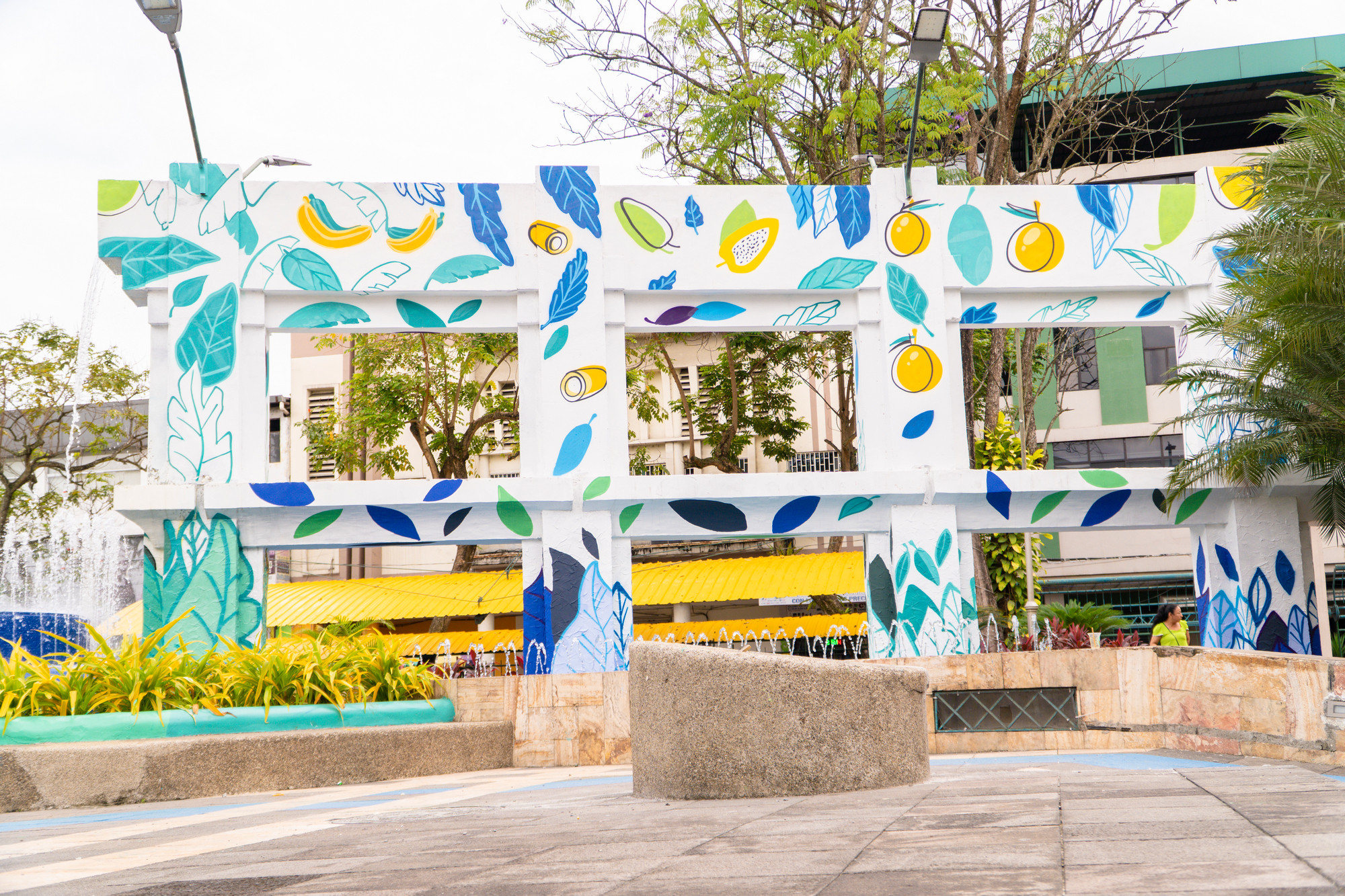
Adolescents and municipal authorities co-designed a land-use plan for the park, aimed at ensuring that its revitalisation would be sustained over time. This marked a shift from temporary activation to longer-term thinking about how public spaces are governed and maintained.
Inside the municipal government, the change in perception has been clear.
“Now adolescents are more participatory and speak with greater confidence,” says Sergio Yépez. “When we hear them present strong and well-articulated ideas, we understand that they have much to contribute.”
Adolescents from the Nucleus Group are now invited to municipal activities, community discussions and technical processes – not as observers, but as contributors.
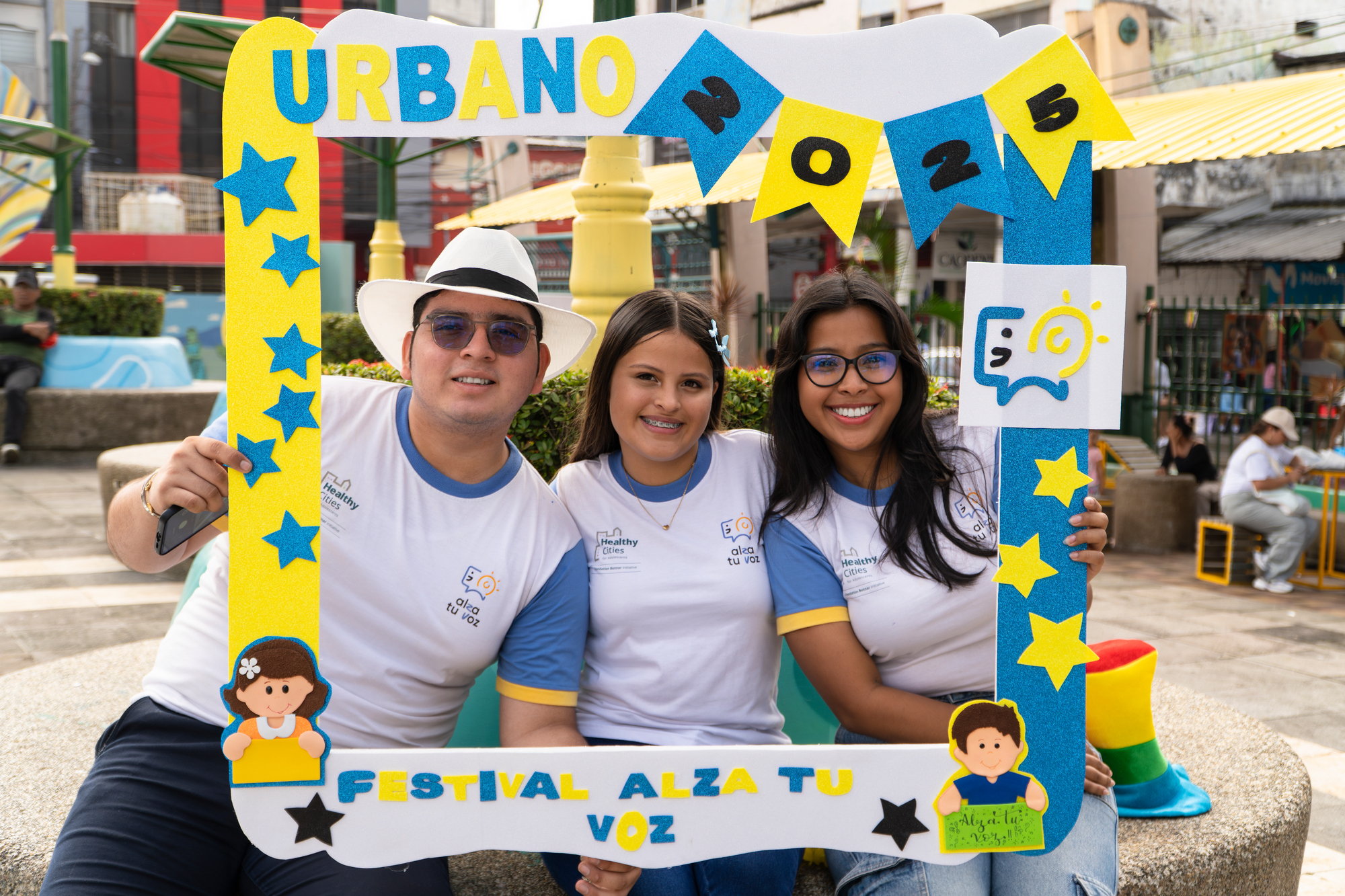
“They participate in the front row and not just as attendees,” he adds.
For Luis Mario, the transformation is deeply personal. The teenager who once avoided speaking now represents adolescents in meetings, engages with local media and encourages others to get involved.
“I am no longer afraid to speak,” he says. “Now I feel confident expressing what the city needs.”
The municipality is also working to ensure that these changes endure beyond the project. A municipal ordinance aimed at strengthening youth participation is currently being developed – creating a formal framework for adolescents to continue shaping civic life.
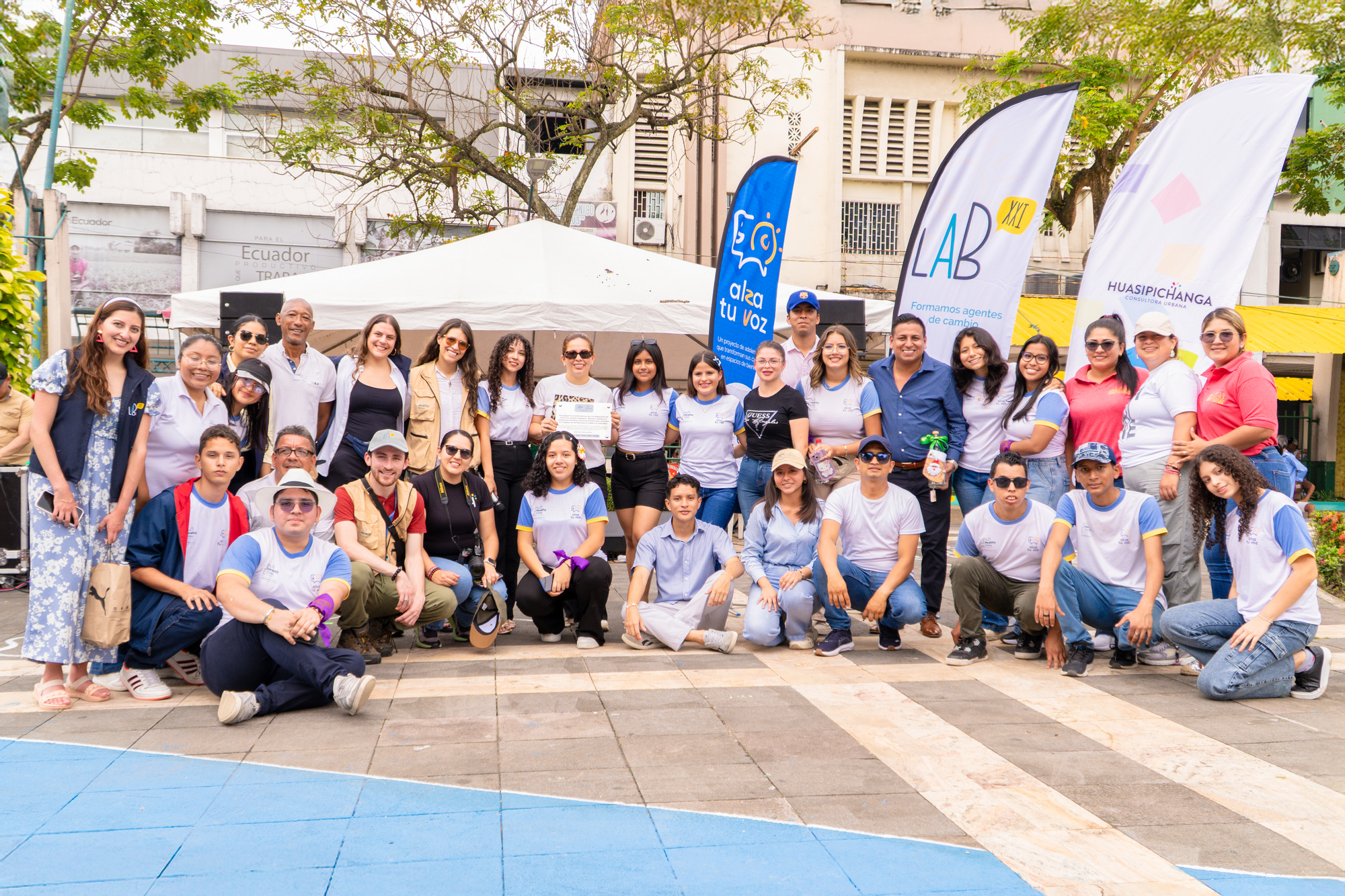
In Quevedo, the transformation did not begin with a policy.
It began with a group of adolescents discovering that their voices mattered – and a city beginning, slowly but decisively, to listen.